Oct 14, 2025
Introduction
As more airlines are adopting NDC, there is a need to manage their release life cycle (De-Coupled Model) with the ability to test each airline API in isolation with 100% automation and improved quality, on demand scaling, and airline-level customisations.

As more airlines are adopting NDC, need ability to manage their release life cycle (De-Coupled Model)
Ability to test each airline API in isolation with 100% automation and improved quality
On demand scaling based on in-take needs
Ability to do customizations at airline level instead of waiting for core product updates
Ability to run entire test cycle with 100% automation and improve quality
Auto scaling infrastructure by component by airline to efficiently use cloud capabilities.

Coupled dependencies between core product and airline specific modules
Any changes to core modules force testing for all airlines and force to absorb changes
Airline level scalability by application for better efficiencies is dependent on de-coupling

Designed and built a de-coupled NDC packaging model by airline that can mange their own release life cycle.
Airline team 100% autonomy to mange any change without dependencies on other teams
Left-Shift testing with automation solves defect-leak issues
On-demand management of environments along with autoscaling in production environments
High availability and configuration consistency across environments of dev life cycle
Test automation with improved quality using data driven and low code platforms.
Technological Framework
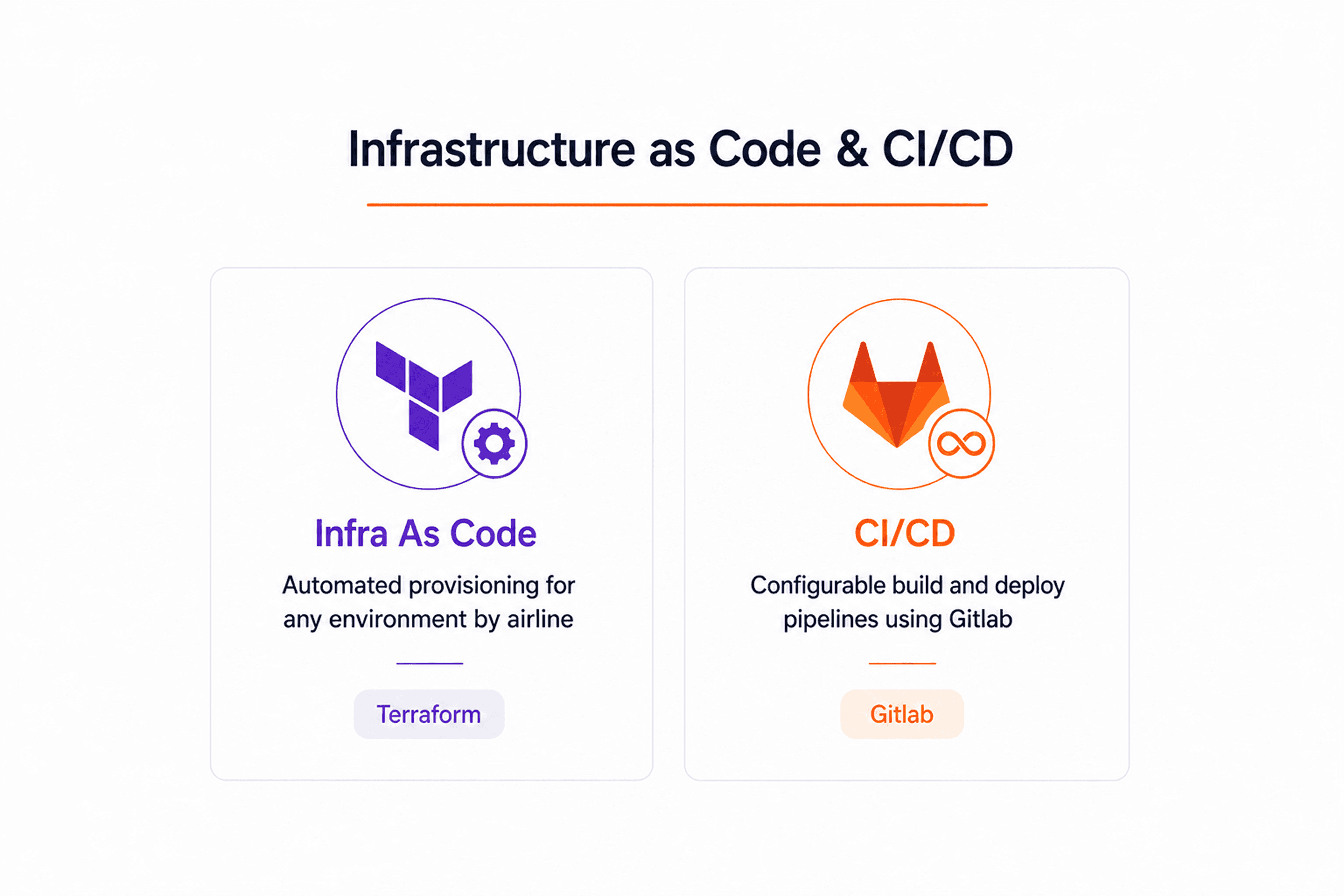
Why these Setup?
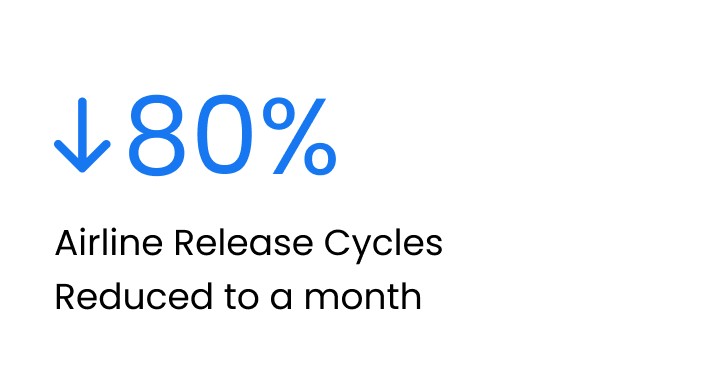
Terraform enables each airline's environment to be provisioned identically and on-demand, while Gitlab pipelines give airline teams the autonomy to deploy independently reducing release cycles from 5-6 months to under a month.
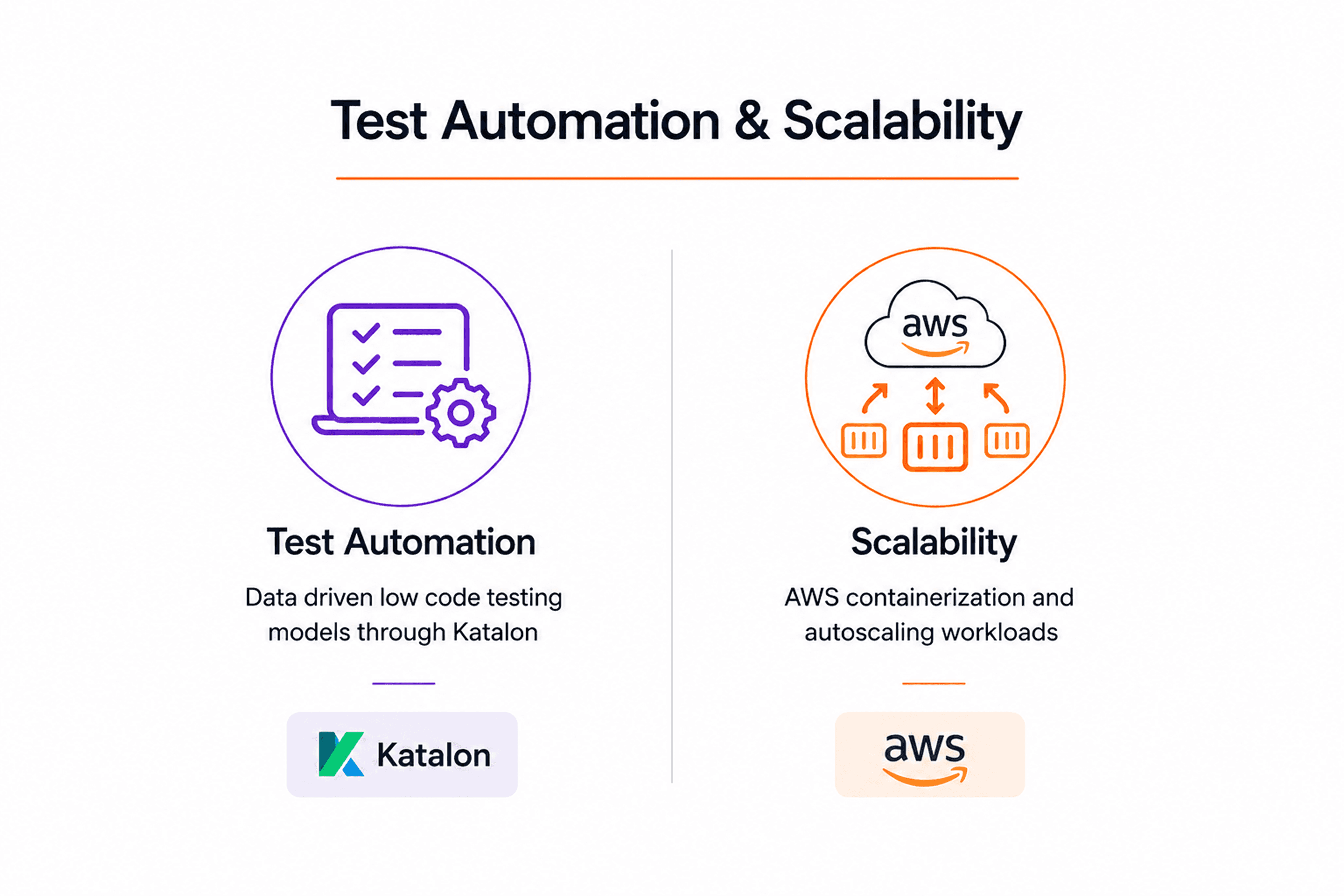
Why this Setup?
Katalon's low-code test automation enables comprehensive coverage without large QA teams, while AWS autoscaling ensures each airline's production environment scales precisely to demand eliminating over-provisioning.
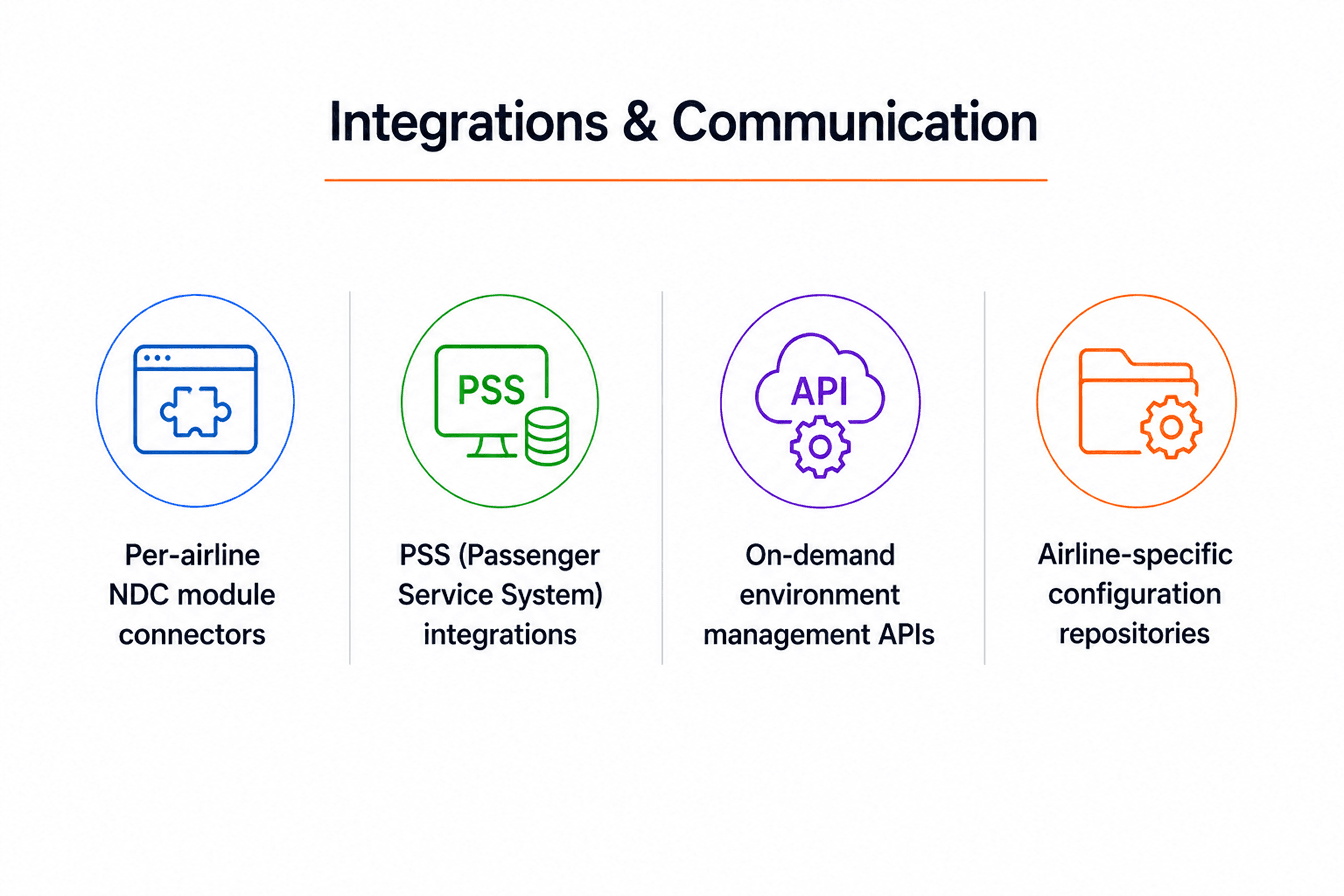
Why this Setup?
Per-airline module connectors with isolated environment management ensure that changes to one airline's PSS or NDC configuration have zero impact on other airlines sharing the same platform.

Takeaway
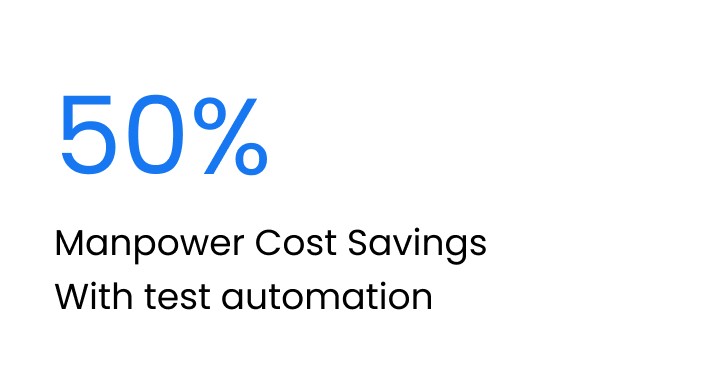
Zapcom built a de-coupled NDC packaging and deployment model that reduced airline release cycles from 5-6 months to under a month achieving 80% reduction in release time, 25% infrastructure cost savings, and 50% manpower cost savings through test automation.
Business Outcomes
Massively reduced release cycles, infrastructure cost savings, and manpower savings through automation.